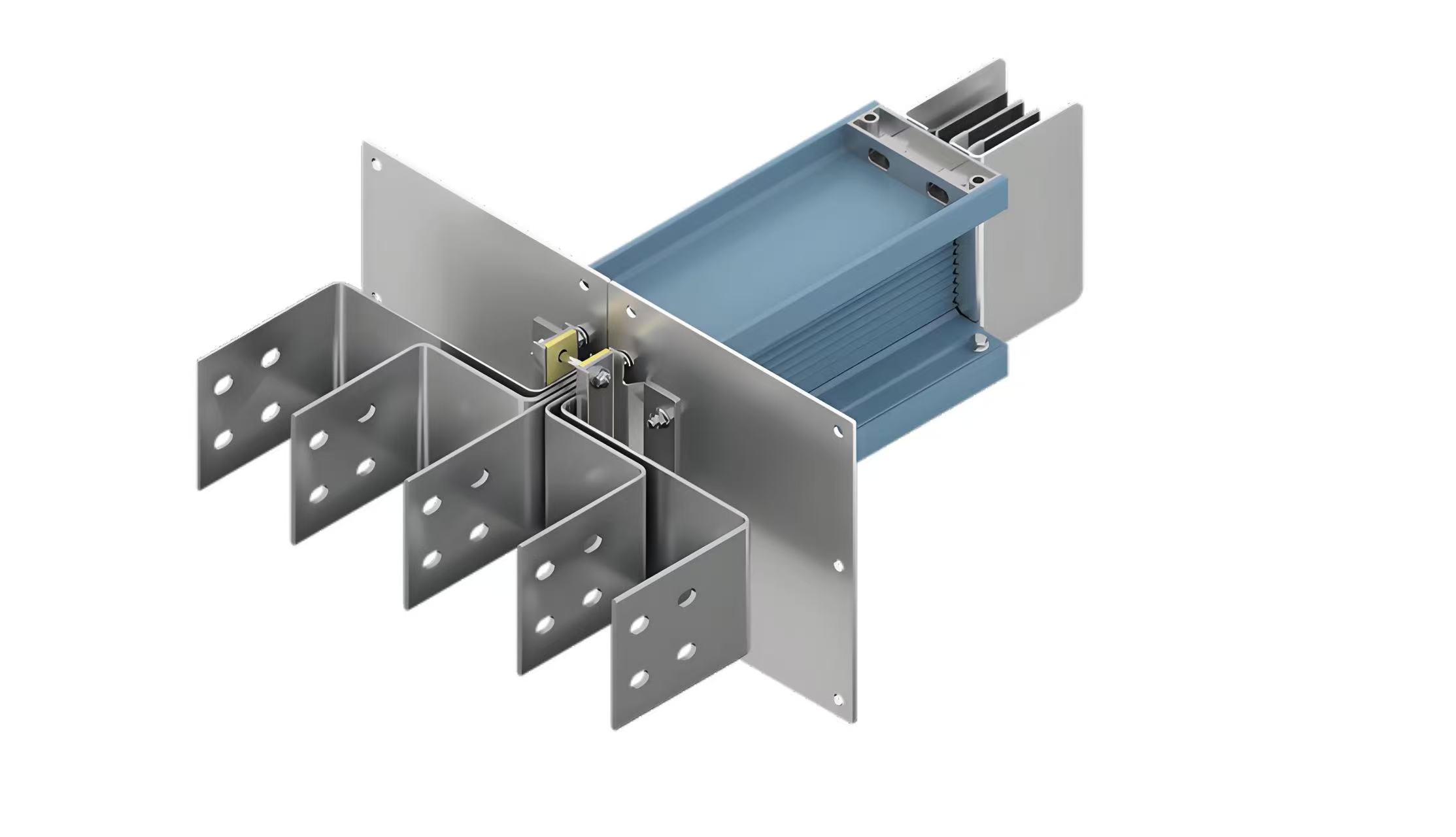
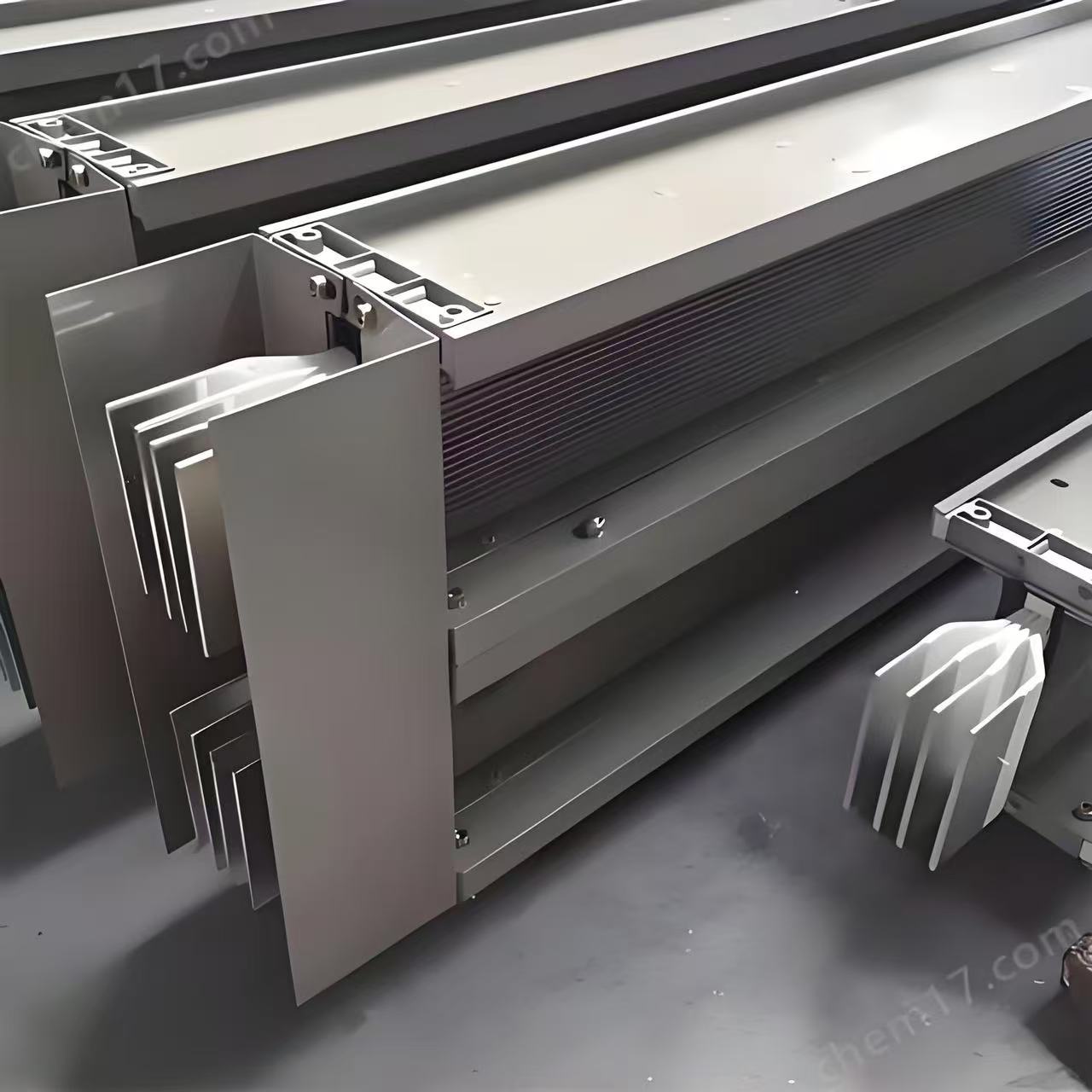
In modern power distribution—spanning industrial facilities, commercial complexes, high-density residential projects, and AI data centers—selecting the optimal conductor material for busbar trunking systems is a critical decision for electrical engineers and procurement directors.
When evaluating system specifications, two key questions frequently arise:
* Why is copper busbar trunking significantly more expensive than aluminum for identical current ratings (e.g., 2000A / 2500A)?
* If switching to aluminum, will engineering performance be compromised, and how much cost reduction can actually be achieved?
Busbar selection is rarely a simple matter of upfront price comparison. It requires a balanced evaluation of capital expenditure (CAPEX), spatial footprint, long-term operational loss, and lifetime system reliability.
1. Technical Performance Comparison: Copper vs. Aluminum
The fundamental physical properties of each metal dictate their performance in power transmission.
Electrical Conductivity and Conductor Cross-Section
Copper possesses superior electrical conductivity and significantly lower resistivity. At equivalent cross-sectional areas, copper conductors deliver higher current capacity, lower temperature rise, and reduced long-term power loss.
Aluminum’s conductivity is approximately 60% that of copper. To match the current-carrying capacity of a copper system (e.g., 2500A), an aluminum conductor requires approximately a 40% to 50% larger cross-sectional area.
Weight and Structural Load Requirements
Despite requiring a larger cross-section, aluminum’s density (2.7\text{ g/cm}^3) is far lower than copper’s (8.9\text{ g/cm}^3).
For equivalent current-carrying capacities, an aluminum busbar system is 40% to 50% lighter than its copper counterpart. This provides three major engineering advantages:
* Lower shipping and logistical costs for international freight;
* Easier and faster installation on site;
* Reduced structural stress on building support frameworks and cable trays.
Thermal Stability and Operational Reliability
Copper exhibits exceptional resistance to thermal cycling, low contact resistance, and superior mechanical strength. It remains the preferred choice for mission-critical applications such as AI data centers, semiconductor fabrication plants, healthcare facilities, and heavy industrial plants.
However, modern aluminum alloy busbars—enhanced with advanced alloy formulation, silver/tin surface plating, and high-integrity joint connection design—fully meet the strict safety and performance standards of standard industrial and commercial infrastructure.
2. Case Study: Financial Comparison on an Active Project
To illustrate the economic difference, we analyze the cost structure of a recent commercial project (Hongchen Jiuxi Yuntai Phase II).
Project Overview
* Application: Main Electrical Distribution (Fire-Resistant Busbar Trunking)
* Key Specifications: NH-1000A/5P, NH-1250A/5P, NH-2000A/4P, and NH-2500A/5P
* Total System Length: Approximately 255.5 meters (including accessories such as tap-off units, flexible copper connectors, feed-in boxes, and support hardware)
Option A: High-Reliability Copper Busbar System (Original Design)
* Configuration: High-purity electrolytic copper conductors with mica tape fireproofing and external fire-retardant coating.
* Materials & Accessories Subtotal: ~$105,000 USD (RMB 744,806)
* Installation & Technical Services: ~$9,000 USD (RMB 64,284)
* Total Project Investment: ~$114,000 USD (RMB 809,090)
> Key Advantage: Maximum energy efficiency, minimal spatial footprint, excellent thermal margins, and long-term durability.
>
Option B: Cost-Optimized Aluminum Alloy Busbar System (Alternative Evaluation)
Maintaining the same rated current capacity, temperature rise limits, and safety standards, the conductors are replaced with electrical-grade aluminum alloy with enlarged cross-sections:
* Unit Cost Ratio: Overall unit pricing is approximately 60% of the copper solution.
* Estimated Total Project Investment: ~$68,400 USD (RMB 485,500)
Comprehensive Cost & Performance Comparison
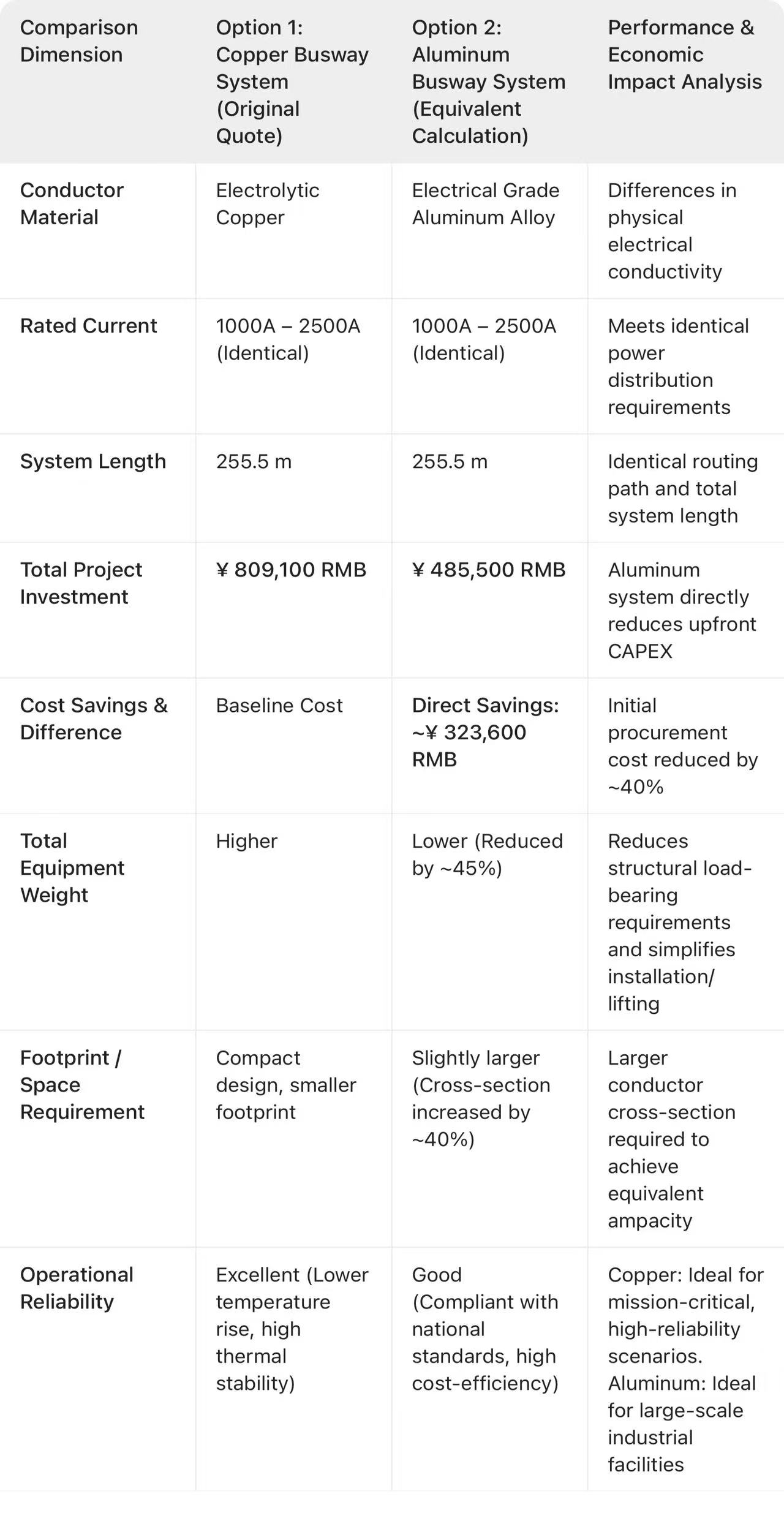
Financial Insight: On a modest 255-meter run, switching to aluminum reduces procurement costs by over $45,000 USD (~40%). On large-scale industrial projects with thousands of meters of busbar, savings can easily reach hundreds of thousands of dollars.
3. Raw Material Price Volatility & Dynamic Price Adjustment
Raw material fluctuations directly affect busbar procurement costs. To ensure transparency for both suppliers and clients, standard contracts incorporate a Raw Material Price Indexation Mechanism.
In this project, prices were benchmarked against official metals market spot rates:
* Copper Benchmark Price: $15,000/ton (RMB 106,770/ton)
* Aluminum Benchmark Price: $3,250/ton (RMB 23,170/ton)
Price Adjustment Formula:
When official metal prices fluctuate beyond predefined thresholds (e.g., $150/ton for copper or $30/ton for aluminum) between quote date and payment date, contract values are adjusted as follows:
This transparent mechanism protects clients from market volatility while ensuring fair manufacturer pricing.
4. Selection Matrix: When to Choose Copper vs. Aluminum
Choose Copper Busbars When:
* Space is strictly constrained: Compact electrical risers or dense switchgear rooms;
* Mission-critical continuous operation: AI data centers, semiconductor fabs, and critical healthcare facilities;
* Severe environments: Locations requiring maximum mechanical strength and corrosion resistance.
Choose Aluminum Busbars When:
* Large-scale industrial facilities: Long run lengths where upfront CAPEX is a primary driver;
* Standard commercial buildings: Projects aiming for rapid ROI and lower initial outlay;
* Retrofits with load restrictions: Older structures requiring lightweight electrical distribution.
Conclusion
At Danchen Electric, our core philosophy is "People Are the Key". We do not simply sell electrical hardware—we provide tailored engineering analyses to help you balance CAPEX, operational performance, and safety.
Whether your project demands maximum current density with copper or optimized return on investment with aluminum, our technical team provides dual-option engineering estimates to help you make informed power distribution decisions.
Email: fmao732@gmail.com
Add: Tanghu East Road, Shuangliu District, Chengdu, Sichuan, China
