Providing both 99.99% pure copper and high-grade aluminum options, configured to meet specific project budgets without sacrificing electrical efficiency.
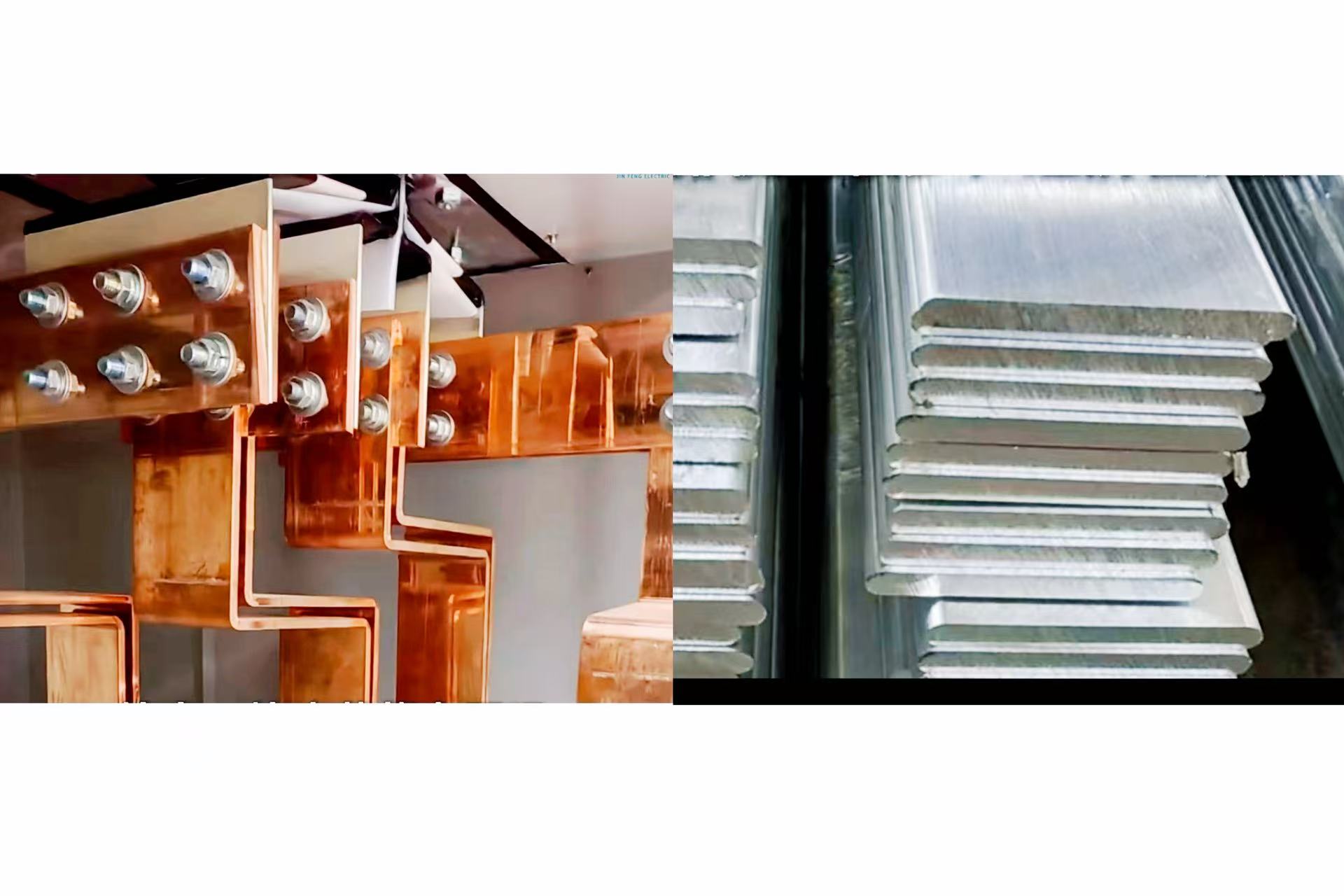
1. Conductivity & Dimensions
Copper boasts a conductivity of nearly 100% IACS (International Annealed Copper Standard), whereas aluminum achieves only about 61%. Consequently, to carry the same current capacity, an aluminum busbar requires an approximately 50% larger cross-sectional area than a copper one.
2. Thermal Stability
Copper delivers high thermal conductivity paired with a low coefficient of thermal expansion, ensuring that connections remain secure. Aluminum, however, has a significantly higher thermal expansion coefficient. Frequent thermal cycling can lead to loose joints, increasing the risk of localized overheating.
3. Oxidation & Lifespan
The oxide layer formed on copper remains conductive. In contrast, aluminum surfaces quickly develop a non-conductive, insulating aluminum oxide film. Furthermore, aluminum is prone to "creep" (gradual deformation under continuous mechanical stress), which can compromise long-term reliability compared to copper.
4. Cost & Weight
Aluminum has only 30% the density of copper and a much lower material cost, offering significant advantages in initial investment and ease of installation. However, copper busbars incur extremely low power losses, delivering superior long-term cost-effectiveness when evaluating the Total Cost of Ownership (TCO).
Email: fmao732@gmail.com
Add: Tanghu East Road, Shuangliu District, Chengdu, Sichuan, China
